Scandinavian Pen Peptide
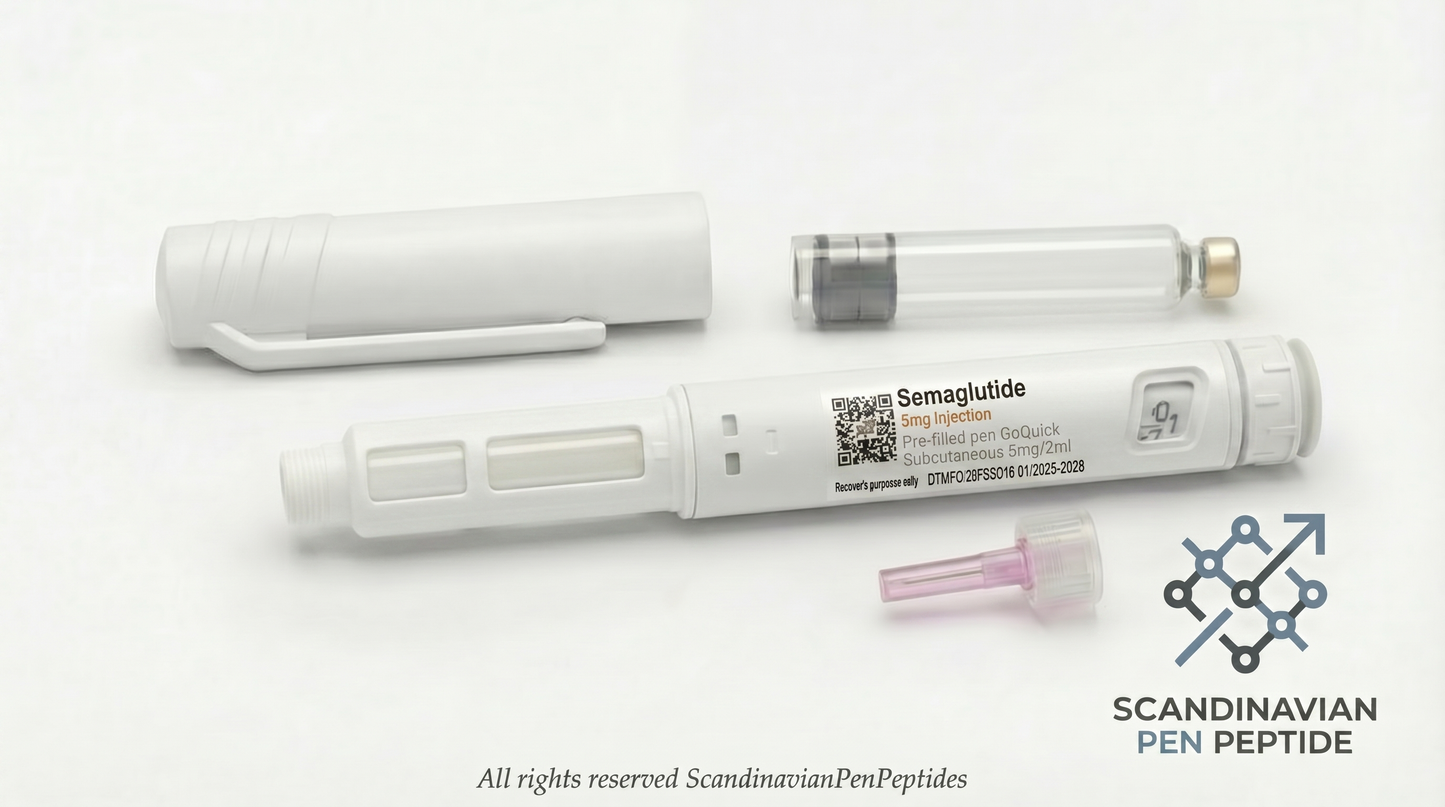
Semaglutide | 5mg
Semaglutide | 5mg
Couldn't load pickup availability
- Purity ≥98% for precise research protocols
- Delivery with DHL Express in a thermo-insulated package
- Secure payment by bank transfer
What is semaglutide? Effects, research, and potential benefits
Semaglutide is a modern active substance belonging to the class of GLP-1 (Glucagon-Like Peptide-1) receptor agonists. This peptide is an analogue of the endogenous incretin hormone GLP-1, which plays a central role in blood sugar and metabolism regulation.
Semaglutide supports the release of insulin from the pancreas in response to food intake. It simultaneously reduces the secretion of glucagon, a hormone that raises blood sugar. Thus, semaglutide can help to reduce postprandial hyperglycemia and maintain stable blood sugar levels.
In addition to its action on glucose metabolism, semaglutide also influences the regulation of appetite and body weight. The substance slows gastric emptying and acts on the central nervous system, which can induce a prolonged feeling of satiety. Due to these properties, semaglutide is the subject of extensive scientific research.
Benefits of semaglutide
Semaglutide offers a series of potential benefits that have been studied in numerous clinical trials.
Blood sugar regulation
Semaglutide supports blood sugar control by promoting insulin release after meals while reducing glucagon production.
Improved insulin sensitivity
The substance can improve the body's ability to use insulin effectively. This is particularly relevant in cases of insulin resistance or prediabetes.
Weight loss support
Studies show that semaglutide can reduce hunger and prolong satiety, thereby promoting sustainable weight loss.
Improved lipid profile
Regular use can help to reduce LDL-cholesterol ("bad cholesterol") and increase HDL-cholesterol ("good cholesterol"), which can reduce cardiovascular risk.
Liver function support
Some studies suggest that semaglutide can help to reduce fat accumulation in the liver, which may be relevant in cases of non-alcoholic fatty liver disease (NAFLD).
Prevention of diabetic complications
Semaglutide is also being studied in the context of reducing microvascular complications such as diabetic retinopathy or kidney damage.
Mechanism of action of semaglutide
Semaglutide acts by selectively binding to GLP-1 receptors, which are present in the pancreas, digestive system, and central nervous system.
The activation of these receptors triggers a cascade of signals that supports the following processes:
- increased insulin release in case of high blood sugar
- reduced glucagon secretion
- decreased hepatic glucose production
In addition, semaglutide slows gastric emptying, which allows for slower nutrient absorption. It also influences appetite regulation in the hypothalamus, a central brain region that controls hunger and satiety.
The combination of these peripheral and central effects leads to an overall action on metabolism, blood sugar regulation, and body weight.
Clinical studies on semaglutide
Semaglutide has been studied in numerous clinical trials that analyzed its efficacy and safety.
One of the most important studies is the SUSTAIN-6 study, which involved more than 3,000 patients with type 2 diabetes. The results showed a significant reduction in major cardiovascular events, including heart attacks and strokes, compared to the placebo group.
Other studies in the SUSTAIN series (SUSTAIN 1–5) show:
- a notable reduction in HbA1c levels
- an improvement in insulin sensitivity
- measurable weight loss
These results highlight the potential of semaglutide to improve the metabolic health and quality of life of people with type 2 diabetes and obesity.
Dosage and use of semaglutide
The optimal dosage of semaglutide is individual and depends on several factors, including health status and medical recommendations.
In general, semaglutide is injected subcutaneously once a week.
The usual initial dose is:
- 0.25 mg per week
It can be gradually increased according to individual response:
- 0.5 mg per week
- 1 mg per week
A semaglutide pen containing 5 mg in total includes 200 units of 25 µg each.
Dosage examples
1 unit — 25 µg
10 units — 0.25 mg
20 units — 0.5 mg
30 units — 0.75 mg
40 units — 1 mg
If a dose is missed, it should be taken as soon as possible, without doubling the next dose.
Possible side effects of semaglutide
Semaglutide is generally well tolerated. However, some people may experience mild and transient side effects.
The most common are:
- Nausea or digestive upset
- Diarrhea or constipation
- Mild headaches
- Fatigue
- Slight redness or itching at the injection site
These symptoms usually appear at the beginning of use and often disappear after a period of adaptation by the body.
In case of persistent symptoms, it is advisable to consult a doctor.
Conclusion
Semaglutide is a modern peptide from the GLP-1 receptor agonist group, which plays an important role in regulating blood sugar, appetite, and metabolism. Numerous studies demonstrate its potential in the treatment of type 2 diabetes and metabolic diseases.
Through its action on several physiological processes simultaneously, semaglutide represents a significant advance in modern metabolic research.
Partager