Scandinavian Pen Peptide
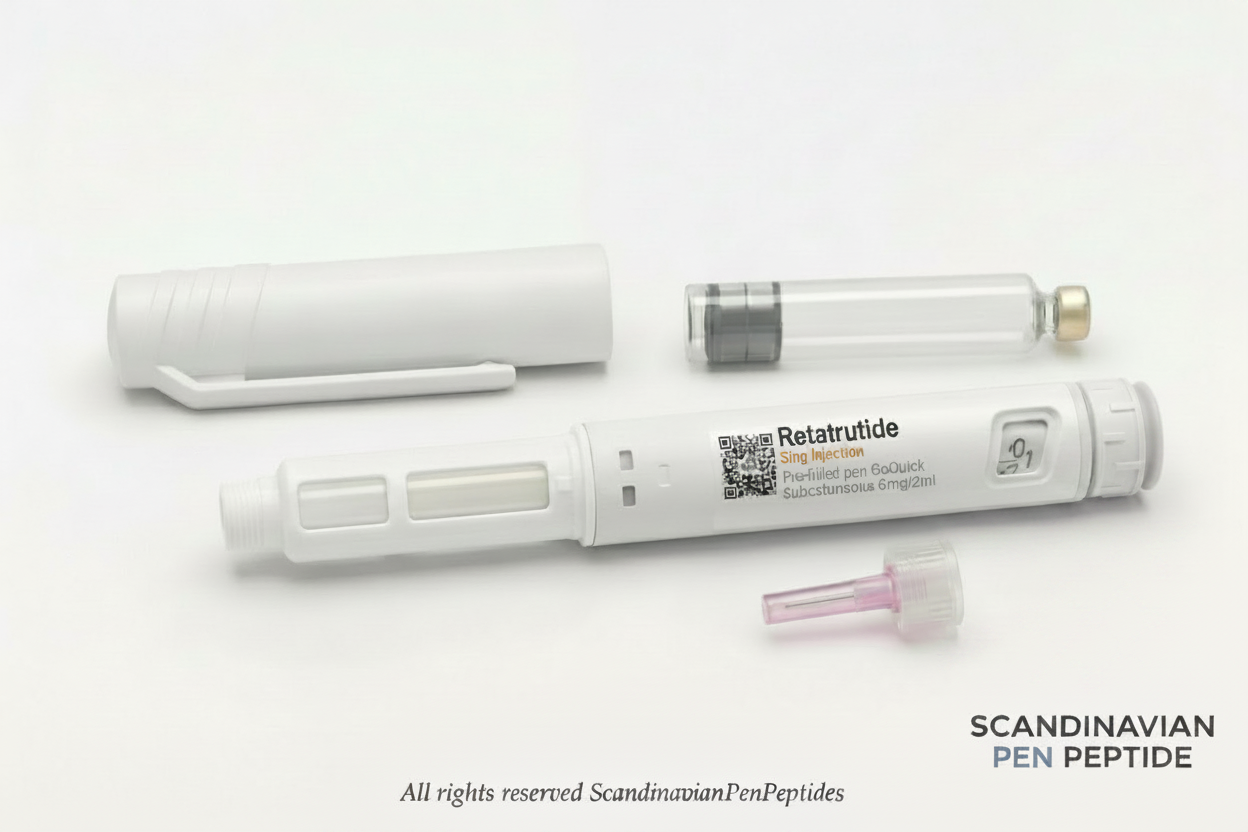
Retatrutide | 6mg/12mg — Triple Agonist Metabolic Peptide
Retatrutide | 6mg/12mg — Triple Agonist Metabolic Peptide
Couldn't load pickup availability
- Purity ≥98% for precise research protocols
- Delivery with DHL Express in a thermo-insulated package
- Secure payment by bank transfer
What is Retatrutide?
Retatrutide is an innovative synthetic peptide extensively studied in scientific research, particularly in relation to body weight regulation and metabolic activity. The substance acts as a multi-receptor agonist and interacts with three key hormonal pathways: GLP-1 (Glucagon-Like Peptide-1), GIP (Glucose-dependent Insulinotropic Polypeptide), and Glucagon.
These receptors play a decisive role in appetite regulation, energy balance, and glucose metabolism. By simultaneously activating multiple metabolic pathways, Retatrutide belongs to a new generation of peptide compounds being studied in modern research programs for the treatment of obesity and metabolic disorders.
Potential Benefits of Retatrutide
Body Weight Regulation
Experimental studies show that Retatrutide can influence appetite control and increase feelings of fullness, thereby reducing caloric intake.
Improved Glucose Homeostasis
As a GLP-1 receptor agonist, Retatrutide can stimulate insulin secretion and help stabilize blood glucose levels after meals.
Influence on Lipid Metabolism
Preliminary studies suggest possible improvements in lipid profiles, particularly LDL cholesterol and triglycerides.
Hormonal Synergy
Simultaneous activation of GLP-1, GIP, and glucagon receptors can coordinate metabolic processes and support more efficient fat burning and energy utilization.
Potential Cardiometabolic Benefits
Through improvements in body weight, blood glucose, and lipids, Retatrutide is also being studied in the context of cardiometabolic health.
Mechanism of Action of Retatrutide
GLP-1 Receptors
Promote glucose-dependent insulin release and simultaneously reduce glucagon secretion, thereby improving glycemic control.
GIP Receptors
Play an important role in glucose-dependent insulin secretion and in the regulation of energy and lipid metabolism.
Glucagon Receptors
Support the mobilization of fat stores and energy expenditure, thereby influencing overall metabolism.
Clinical Studies on Retatrutide
Phase 1
Early studies show a significant effect on appetite control and weight loss, without severe side effects.
Phase 2
Overweight or obese participants, some with type 2 diabetes. Results:
- Weight loss of approximately 15% to 24% of body weight after about 48 weeks
- Improved glycemic control and insulin sensitivity
Phase 3
This phase is currently studying long-term efficacy, safety in larger patient groups, potential cardiovascular benefits, and effects on fatty liver diseases (NAFLD and NASH).
Dosage and Use of Retatrutide
Retatrutide is typically injected once a week subcutaneously. The typical starting dose is approximately 2 mg, which can be gradually increased to 6 mg or 8 mg.
The injection is administered in the abdominal area or the front of the thigh. Wait 10 seconds before removing the needle and regularly change the injection site.
Information on Pen Dosing
Retatrutide 6 mg Pen
Contains 120 units of 50 µg each
1 unit = 50 µg | 10 units = 0.5 mg | 20 units = 1 mg | 40 units = 2 mg
Retatrutide 12 mg Pen
Contains 120 units of 100 µg each
1 unit = 100 µg | 10 units = 1 mg | 20 units = 2 mg | 60 units = 6 mg
Possible Side Effects of Retatrutide
Studies show good general tolerability, but transient side effects may occur:
- Nausea and vomiting
- Diarrhea or constipation
- Fatigue
- Slight increase in heart rate
These symptoms usually appear at the beginning of use and subside as the body adapts.
Partager