Scandinavian Pen Peptide
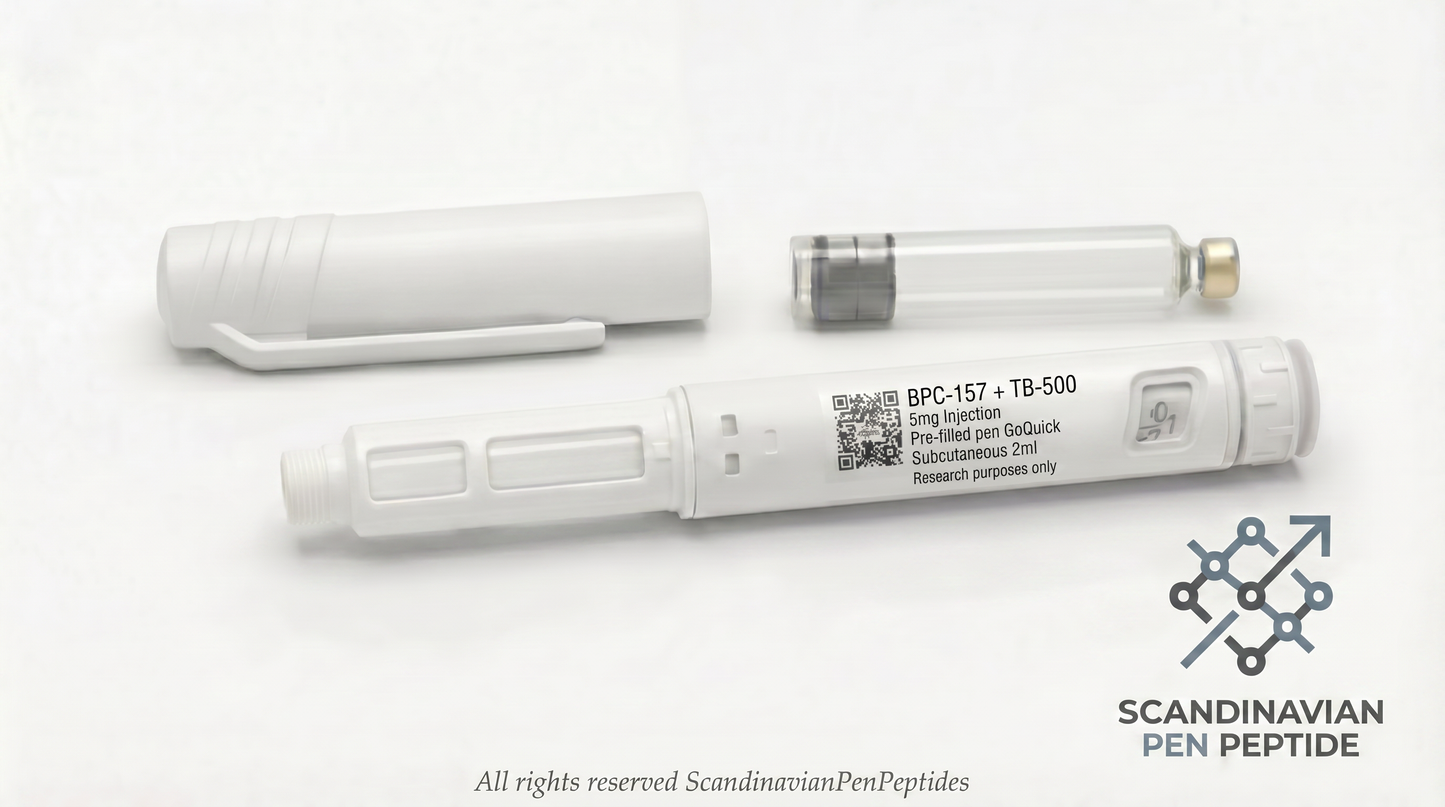
BPC-157 (5mg) + TB-500 (5mg) | Blend — Synergistic Regenerative Peptide
BPC-157 (5mg) + TB-500 (5mg) | Blend — Synergistic Regenerative Peptide
Couldn't load pickup availability
- Purity ≥98% for precise research protocols
- Delivery with DHL Express in a thermo-insulated package
- Secure payment by bank transfer
What is BPC-157 + TB-500 Blend?
BPC-157 + TB-500 is a synergistic combination of two synthetic peptides studied in experimental and scientific contexts. Due to their potential properties related to cellular homeostasis, tissue regulation, and regenerative processes, they are at the heart of many preclinical research approaches.
BPC-157 (Body Protection Compound-157) is a peptide initially isolated from human gastric juice, composed of 15 amino acids. In experimental models, it is studied in connection with cellular regeneration, tissue protection, and stress responses.
TB-500, a synthetic form of Thymosin Beta-4, is a peptide with proven biological activity. It plays a role in processes such as cell migration, angiogenesis, and the modulation of inflammatory reactions.
The combination of these two peptides creates a frequently used research tool to study the molecular mechanisms of tissue repair, anti-inflammatory processes, and muscle adaptation.
Potential Benefits of BPC-157 + TB-500
Support for Muscles and Connective Tissues
In animal models, faster regeneration of muscle fibers, tendons, and connective tissues has been observed.
Improved Vascularization
The synergistic effect on angiogenesis can improve blood supply to the studied tissue.
Modulation of Inflammatory Processes
Experimental studies show a possible reduction in inflammatory markers in localized tissue damage.
Cell Migration and Tissue Remodeling
The combination can support processes such as re-epithelialization and cell migration, essential for tissue repair.
Mechanism of Action of BPC-157 + TB-500
Action of BPC-157
- Promotion of VEGF (Vascular Endothelial Growth Factor) expression, supporting angiogenesis and vascular formation
- Support for intercellular communication under oxidative stress, particularly in endothelial tissue
- Stabilization of the nitric oxide (NO) system, important for vascular function and repair processes
Action of TB-500
- Promotion of immune and repair cell mobility through influence on the actin cytoskeleton
- Stimulation of neovascularization in damaged tissues
- Modulation of inflammatory processes by regulating cytokine activity and reducing excessive tissue fibrosis
In combination, these mechanisms complement each other: while BPC-157 creates favorable conditions for local healing processes, TB-500 supports cell migration and structural tissue renewal.
Dosage and Use of BPC-157 + TB-500
In experimental contexts, dosages of 10 to 15 units per day are frequently used. The injection is administered subcutaneously in the abdominal area or the front of the thigh. After injection, leave the needle in place for approximately 10 seconds. Regularly change the injection site.
A typical cycle lasts approximately 45 days. The pen contains 200 units, with each unit containing 25 µg of BPC-157 and 25 µg of TB-500. Depending on the dosage, one pen lasts approximately 15 to 20 days.
Dosage Examples
1 unit — 25 µg BPC-157 / 25 µg TB-500
5 units — 125 µg / 125 µg
10 units — 250 µg / 250 µg
15 units — 375 µg / 375 µg
Possible Side Effects of BPC-157 + TB-500
Available preclinical data suggest that BPC-157 and TB-500 are well tolerated in experimental models. Observed side effects may include:
- Slight redness or irritation at the injection site
- Occasional fatigue or headaches
- Rarely, localized swelling
These reactions are generally transient and primarily occur in the initial phase. This product is intended exclusively for laboratory and research purposes.
Partager