Scandinavian Pen Peptide
BPC-157 | 5mg — Regenerative Peptide & Tissue Protection
BPC-157 | 5mg — Regenerative Peptide & Tissue Protection
Couldn't load pickup availability
- Purity ≥98% for precise research protocols
- Delivery with DHL Express in a thermo-insulated package
- Secure payment by bank transfer
What is BPC-157?
BPC-157 (Body Protection Compound-157) is a synthetic peptide composed of 15 amino acids, initially isolated from a protein found in human gastric juice. This peptide is increasingly at the forefront of scientific research, particularly in the fields of tissue regeneration, cell protection, and repair processes during physiological or mechanical stress.
Data from preclinical studies suggest that BPC-157 can influence processes such as angiogenesis, inflammation regulation, and cell migration in areas of tissue damage. The peptide is distinguished by its high stability, good biocompatibility, and potential systemic effect.
Potential Benefits of BPC-157
Support for tendon, ligament, and muscle regeneration
Studies in animal models show accelerated recovery of muscle fibers, tendons, and connective tissues after experimental injuries.
Promotion of healing
BPC-157 can support the regeneration of skin, fascia, and connective tissues.
Protection of the gastrointestinal tract
The peptide can contribute to the maintenance of gastric and intestinal mucosal integrity by regulating inflammatory processes and stabilizing epithelial barriers.
Stimulation of angiogenesis
BPC-157 can promote the formation of new blood vessels, particularly through increased expression of VEGF (Vascular Endothelial Growth Factor).
Improved cellular communication
The peptide can support the mobilization of regenerative cells towards damaged tissues.
Support for bone regeneration
Some studies indicate possible effects on bone healing and vascularization of peripheral tissues.
Support for joint function
Research shows potential effects on cartilage and synovial tissues, relevant for joint health.
Mechanism of Action of BPC-157
BPC-157 acts via several cellular and molecular signaling pathways. A central role is played by the modulation of angiogenesis through increased expression of vascular growth factors like VEGF. It also stabilizes the nitric oxide (NO) system, improving local circulation and reducing oxidative stress. Other mechanisms include: inhibition of inflammatory cytokines (TNF-α, IL-6), promotion of collagen synthesis, and accelerated migration of fibroblasts and epithelial cells.
Dosage and Use of BPC-157
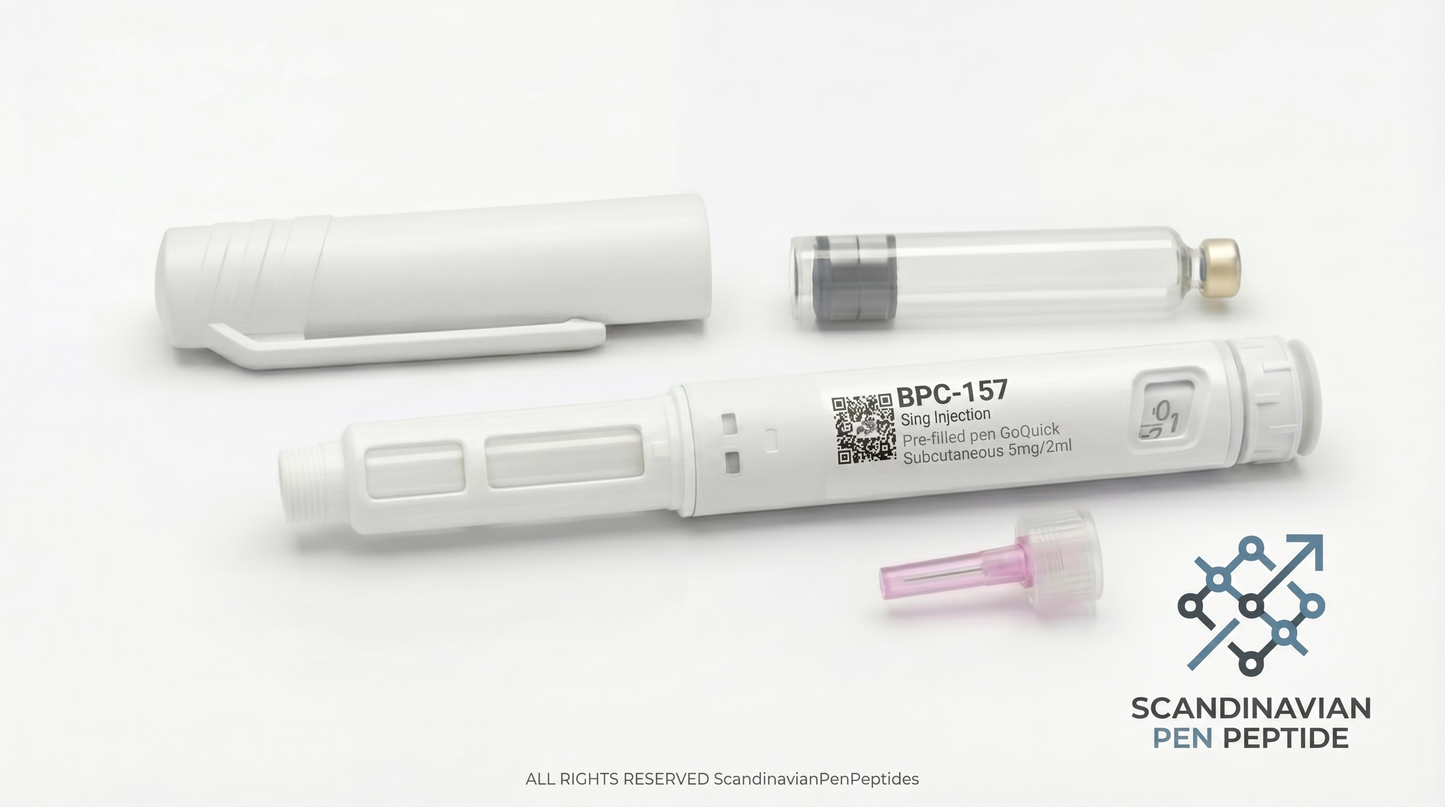
The usual daily dose is 400 to 500 µg, or 16 to 20 units with a standard pen. The pen contains 200 units of 25 µg. Application is generally performed via subcutaneous injection in the abdominal area or the front of the thigh. Change injection sites regularly. Wait 10 seconds before withdrawing the needle.
The duration of a cycle is generally 1 to 3 months. A BPC-157 pen (5 mg) lasts approximately 12 to 13 days depending on the dosage.
Dosage Examples
1 unit — 25 µg | 10 units — 250 µg | 16 units — 400 µg | 20 units — 500 µg
Combination with other peptides
TB-500
One of the most well-known combinations for tendon, joint, and muscle regeneration.
IGF-1 LR3
Can stimulate cell growth and support regenerative processes.
GHRP-2 / GHRP-6
Peptides associated with growth hormone stimulation.
Ipamorelin
A selective GH receptor agonist with a low rate of side effects.
BPC-157 in a sports context
In sports science, BPC-157 is being studied for its potential effects on:
- Faster recovery from muscle injuries
- Reduction of inflammatory processes after intense exertion
- Improved joint mobility and flexibility
- Faster regeneration after intensive training
- Support for gastrointestinal function
Possible Side Effects of BPC-157
BPC-157 is considered a peptide with good tolerability. Observed side effects are rare and generally mild:
- Mild gastrointestinal disturbances such as nausea
- Redness, itching, or pain at the injection site
- Fatigue or headaches at the beginning of the cycle
This product is exclusively for research purposes and should not be used outside of regulated laboratory environments.
Partager